The Media Act 2024: What Broadcasters Need to Know

Chloe Tsang
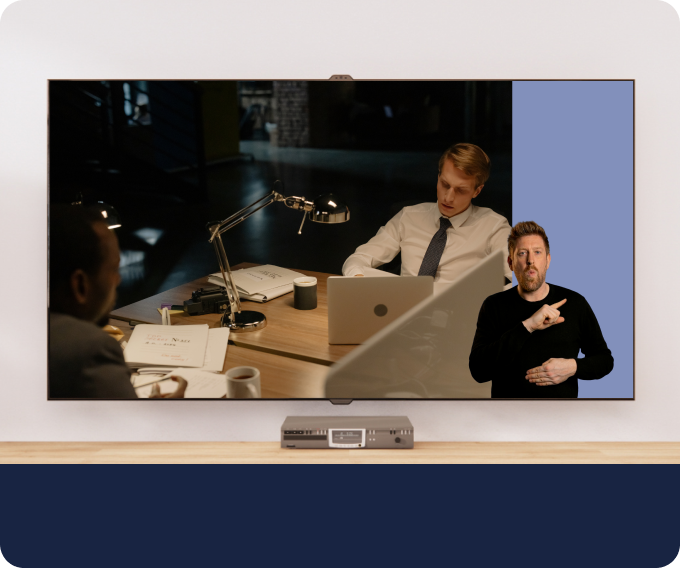
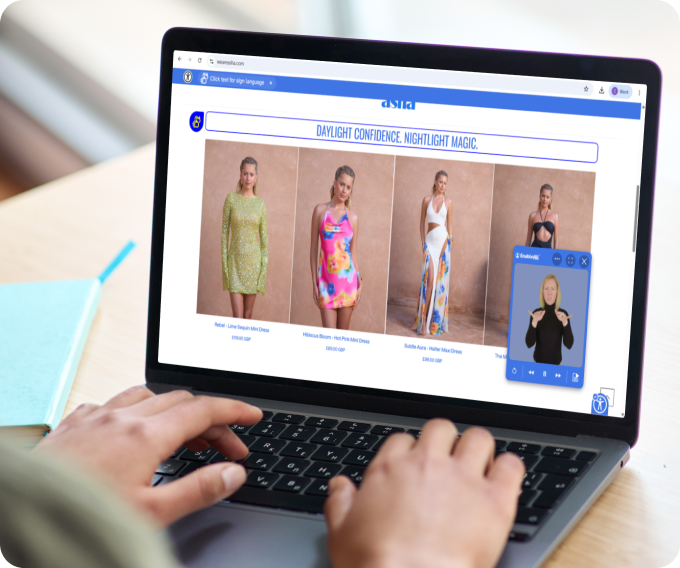
For years, there was a strange gap in UK broadcasting and media law: live TV had to be accessible, but on-demand content didn’t. If you were Deaf and tried to watch something on a streaming platform, there was no legal guarantee you’d get subtitles, let alone British Sign Language (BSL) interpretation.
That’s now changing. The Media Act 2024 brings streaming and on-demand services into the same regulatory framework as traditional broadcasters for the first time, and puts real, binding numbers behind accessibility.
For broadcasters and platforms, this isn’t just a compliance update. It’s a shift that opens up genuine questions about capacity, cost and how technology fits into the solution.
Here’s what the Act actually requires, why it matters for the Deaf community specifically and where AI-powered sign language translation can help close the gap, working alongside, not to replace, human interpreters.
What the Media Act 2024 Requires
The Act was passed in May 2024. Part 4 is the section that matters most for accessibility: it brings video-on-demand (VOD) services under regulation for the first time, creating a new category called “Tier 1 Services” for platforms with more than 500,000 average monthly UK users. That covers the major streaming names such as Netflix, Amazon Prime Video, Disney+ along with public service VOD platforms like ITVX and Channel 4.
Ofcom, the UK’s media regulator, is required to publish an Accessibility Code setting binding quotas for these Tier 1 services. Once fully in force:
- 80% of catalogue hours must be subtitled
- 10% must include audio description
- 5% must be presented in or interpreted into BSL
The rollout is phased. In the first two years, the targets are lower with 40% subtitled and 5% audio-described, building up to the full quotas over roughly four years from when the Code and Tier 1 service list are confirmed.
Why This Matters for Broadcasters
It’s easy to read this as a compliance burden, but there’s a more useful way to frame it: an underserved audience is about to have a legal right to your content.
Deaf and hard of hearing audiences represent a substantial and currently underserved segment of your audience, and platforms that meet, or even exceed, these quotas early stand to gain a real goodwill.
RNID, the charity behind the decade-long “Subtitle It!” campaign that helped push this legislation through, has already publicly urged providers not to wait for the deadline to start improving access.
There’s also a practical argument for starting now rather than later. Building BSL and subtitling capacity from scratch in the final stretch before the deadline is more expensive, more rushed and harder to get right than building it steadily over the four-year runway the Act provides.
What This Means for the Deaf Community
The 5% BSL quota deserves attention on its own terms, separate from the subtitle quota. Subtitles help many Deaf and hard of hearing viewers, but BSL is a distinct, fully-formed language with its own grammar, not a signed version of English. For BSL users, subtitles alone don’t close the accessibility gap.
The scale of what’s still missing is significant. Even outside broadcasting, 60% of Deaf BSL users have said they needed an interpreter to access live broadcasts of government announcements, and gaps remain across live events, breaking news and some on-demand platforms.
The Media Act is a meaningful legal foothold, arguably the first of its kind for UK streaming, but turning a 5% quota into consistent, quality BSL content depends on something the law can’t legislate into existence: enough qualified interpreters to do the work.
The Real Problem: Interpreter Capacity
This is where the numbers don’t match the need. The RNID estimates there are around 1,500 qualified BSL interpreters serving 87,000 Deaf BSL users across the UK. That’s roughly one interpreter for every 60 Deaf people.
According to the National Registers of Communication Professionals working with Deaf and Deafblind people (NRCPD), there are just 908 registered interpreters and 234 trainees UK-wide. In Scotland, there are reportedly 66 registered interpreters and 9 trainees.
The shortage isn’t a quick fix. Qualifying as a BSL interpreter typically takes around seven years, and government reports describe the shortage as chronic, with demand rising faster than training pipelines can keep up.
There are also regional gaps that add to this issue. For example, in Wales, there are only three or four interpreters who can work between spoken Welsh and BSL.
Put simply: interpreters are already stretched thin across healthcare, education, legal services and public life. Broadcasting’s new 5% quota is entering that same finite pool of interpreters.
Where AI Sign Language Translation Fits In
This is the gap we built Signapse to help close. Not by replacing interpreters, but by expanding how much BSL content can realistically be produced without pulling qualified interpreters away from the work only they can do.
Our approach is built around two things we treat as non-negotiable. First, our models are developed in direct partnership with certified BSL, ASL and DGS interpreters, who are involved with reviewing and validating our technology before it’s considered broadcast-ready.
Second, we maintain ongoing feedback loops with the Deaf community itself, so translation quality is shaped by the people who actually rely on it, not just by what a model can technically produce.
In practice, that means thinking about AI and human interpreters are complementary, not competing:
- Where AI can help most: backlog and archive content that would otherwise never get signed at all, high-volume catalogue titles, and lower-stakes formats where broadcasters need to make real, immediate progress toward the 5% quota.
- Where human interpreters remain essential: live broadcasts, breaking news and high-visibility or emotionally nuanced programming, where the standard of quality and trust has to be highest.
- How they work together: AI handling high-volume translation with certified interpreters reviewing and refining pre-recorded content so that scale doesn’t come at the cost of quality.
What Broadcasters Should Do Now
Making changes today ensures both quality and quotas can be met effectively, without having to compromise as deadlines are set. Some starting points include:
- Auditing current subtitle, audio description and BSL provisions against the phased targets.
- Planning where AI-powered sign language technology could realistically cover backlog and archive content, freeing interpreter time for high-stakes live and high-visibility programming.
- Involving certified interpreters early in evaluating any BSL plans.
Next Steps with Signapse
The Media Act 2024 sets a legal floor for accessibility. Meeting it, and genuinely closing the gap for Deaf audiences, will take both scale and quality, working together.
At Signapse, we offer a comprehensive sign language translation solution to help broadcasters meet these new proposed quotas. Our products, SignStream and SignStudio, offer AI-powered sign language translation for both live and pre-recorded content to help reduce the backlog of non-translated BSL content while also combating low-stakes live content.
To find out how our products can help you upgrade your VOD service to a more accessible one, book a demo with us today.
FAQs
Does the Media Act 2024 apply to broadcasters outside the UK?
No, the Media Act 2024 is UK-specific legislation enforced by Ofcom, so it only applies to services operating in the UK market. Global platforms like Netflix or Disney+ are covered for their UK operations specifically, but broadcasters in other countries may fall under their own local frameworks such as the EU’s Audiovisual Media Services Directive (AVMSD) or the US’s ADA Act.
When do broadcasters need to be fully compliant with the accessibility quotas?
The rollout is phased over roughly four years from when Ofcom’s Accessibility Code and Tier 1 service list are confirmed, starting with lower interim targets (40% subtitled, 5% audio-described) in the first two years. Full quotas (80% subtitled, 10% audio-described, 5% BSL) apply once that transition period ends.
Will AI sign language translation replace human BSL interpreters?
No. AI is best suited to expanding the capacity for high-volume or backlog content that would otherwise never be signed at all, not replacing human interpreters. Important live broadcasts, breaking news and high-visibility content still rely on certified interpreters whose expertise also shapes and validates AI translation quality.
Related Posts
The ASL Scalability Problem Enterprise Teams Can’t Ignore
Facilitating ADA Compliance: How Signapse Simplifies Accessibility for Organisations
The Right Interpreter for the Right Room: Rethinking Sign Language Access in a Digital Age
.png)