The European Accessibility Act: What It Means for Businesses and the Deaf Community

Chloe Tsang
Since June 2025, a wide range of products and services sold in the EU have had to meet common accessibility standards. The law behind this is the European Accessibility Act (EAA).
For businesses, it is a compliance milestone. For the Deaf community, it is a step forward, though not a complete one. Here is what the Act does, who it affects, and where sign language fits in.
What is the European Accessibility Act?
The EAA, formally Directive (EU) 2019/882, sets accessibility requirements for a defined list of consumer products and services across all 27 EU member states. It aims to improve access for the estimated 90 million people with disabilities in the EU, and to replace a patchwork of national rules with a single set of standards that makes cross-border trade simpler.
Unlike the Web Accessibility Directive, which covers public-sector bodies, the EAA focuses on the private sector. Products and services must be perceivable, operable, understandable and robust, the same principles that underpin WCAG.
The harmonised standard EN 301 549 is the usual route to demonstrating compliance, and its latest version, published in September 2026, moves to WCAG 2.2 AA and strengthens requirements around real-time text.
Enforcement sits with each member state, so penalties and compliant processes differ by country. Authorities can order products withdrawn, require accessibility audits and publicly name organisations that fall short.
How the EAA Affects Businesses and Organisations in Europe
The Act reaches well beyond technology companies. Its impact depends on the sector:
E-commerce and Retail
Websites, apps, checkout and payment flows, and customer support must all be accessible.
Banking
Online and mobile banking, ATMs, payment terminals and help channels are covered.
Transport
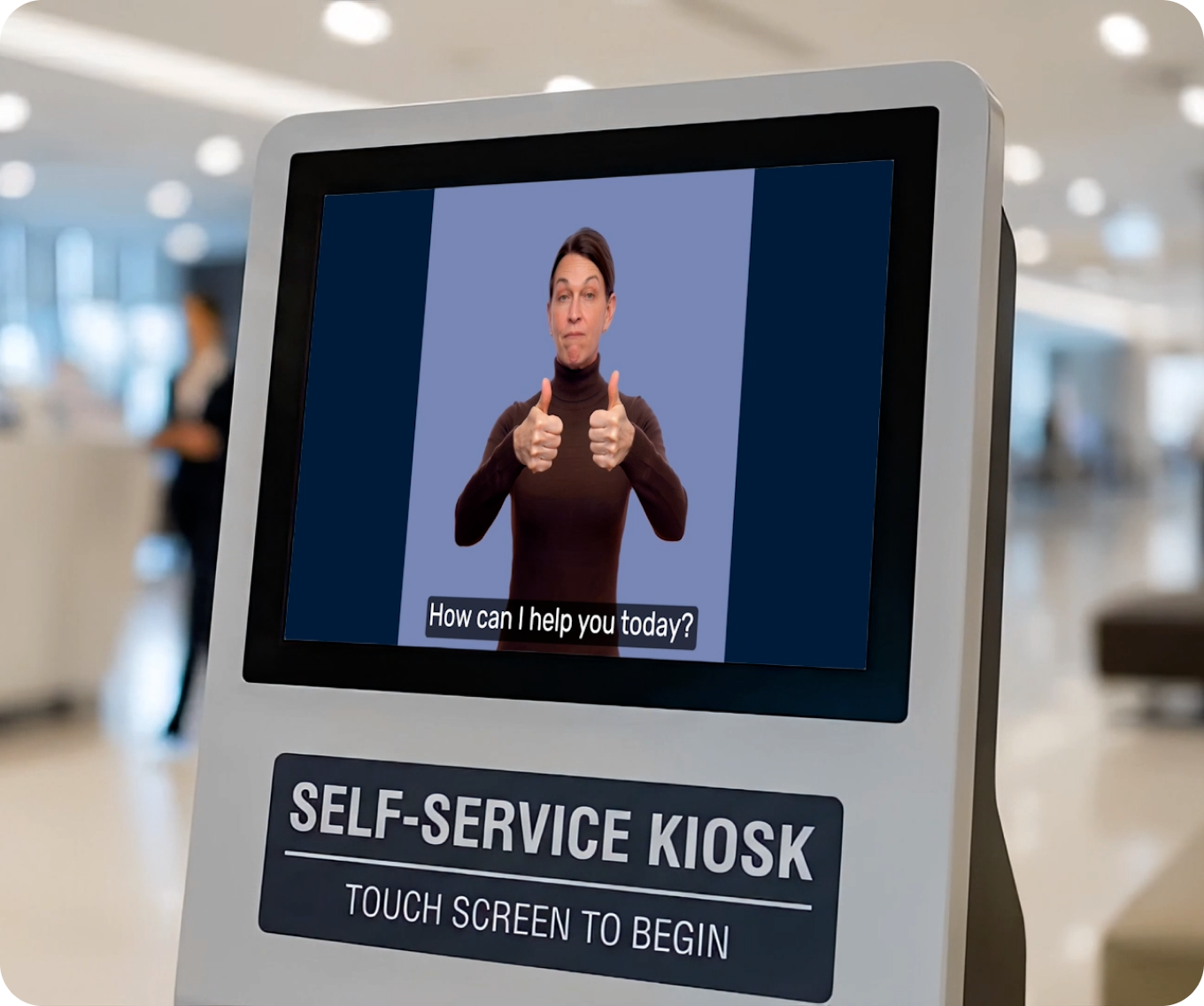
Air, bus, rail and water transport providers must make websites, apps, e-ticketing and real-time travel information accessible, along with ticket machines and check-in kiosks.
Media and Streaming
Audiovisual services, such as streams, must handle access services such as subtitles, audio description and sign language interpretation properly, and make them easy to find and control.
Telecoms
Providers offering video output must support total conversation (real-time video, voice and text together), and emergency communication to 112 must be accessible.
Consumer Electronics
Smartphones, computers, tablets, e-readers and interactive TV equipment are all covered.
Across every sector, support services such as help desks and complaints channels must be accessible, and providers need to publish information on how their service meets the requirements and keep documentation to back it up.
There are limits. Microenterprises providing services are exempt, and organisations can argue that a requirement would fundamentally alter their service or impose a disproportionate burden, although this must be documented and assessed.
The Act also allows businesses to declare their own conformity, which makes good records essential.
What the EU Accessibility Act Means for the Deaf Community
For Deaf people, the EAA delivers some real positives. The Act sets a baseline of subtitles, captions, text alternatives and names sign language interpretation as one of the access services audiovisual providers can offer, and governs how those services are delivered.
It also brings video into telecoms, which is what makes real-time communication in sign language possible and ensures emergency communication to 112 is accessible so that Deaf people can reach emergency services equally.
But the Act does not require sign language access in general. It identifies areas where sign language is encouraged or expected, rather than mandating it, and the European Union of the Deaf (EUD) has pointed out that it places no concrete obligations on providers to ensure sign language access.
The EUD represents around 1 million Deaf sign language users in the EU, for many of whom sign language is their first language, not written text. The EUD is calling for binding sign language accessibility rules across EU media through a revision of the AVMS Directive.
What is the AVMS Directive?
The AVMS Directive (Audiovisual Media Services Directive), formally Directive 2010/13/EU, is the EU’s main rules and regulations when it comes to television broadcasting, on-demand and streaming services, and video sharing platforms such as YouTube.
Article 7 specifically requires member states to ensure services under their jurisdiction become progressively more accessible to people with visual or hearing difficulties. Sign language interpretation is a form of access service that can be included but it is not mandatory.
The EUD’s call for change would mean stronger legal obligations to ensure access in national sign languages. As the EUD puts it, accessibility without sign language access is exclusion.
How Sign Language Translation Can Help Organisations
The EAA sets a baseline rather than a ceiling, and sign language translation is best understood as a way to go beyond minimum compliance and meet the Act’s underlying intent. Sign language translation is not something the Act requires for most content, but it would provide better access for Deaf audiences.
There are several practical places where organisations can start:
- Audiovisual Content: Offering sign language alongside subtitles and audio description gives viewers a choice that matches how they communicate.
- Support and Information Channels: Help centre articles, FAQs, onboarding videos and accessibility statements can be translated into sign language, so Deaf customers can get the same quality of information as everyone else.
- Customer Journeys: Banking explainers, ticketing guides, travel disruption updates and returns instructions are all moments where clear communication matters.
- Beyond the AA Baseline: Sign language video for pre-recorded content is a WCAG Level AAA criterion, so it addresses a need that AA-level compliance work doesn’t fully cover.
Where Resources Cannot Meet Demand
For organisations handling the growing demand for accessible content, limited resources can become a painful barrier. The majority of EU countries have declared a shortage of sign language interpreters with bodies such as the European Forum of Sign Language Interpreters representing only 6,800 sign language interpreters compared to over 1 million sign language users in the EU.
Although the inclusion of sign language in accessibility measures is crucial, the demand far outweighs the resources that are currently available to deliver on these regulations.
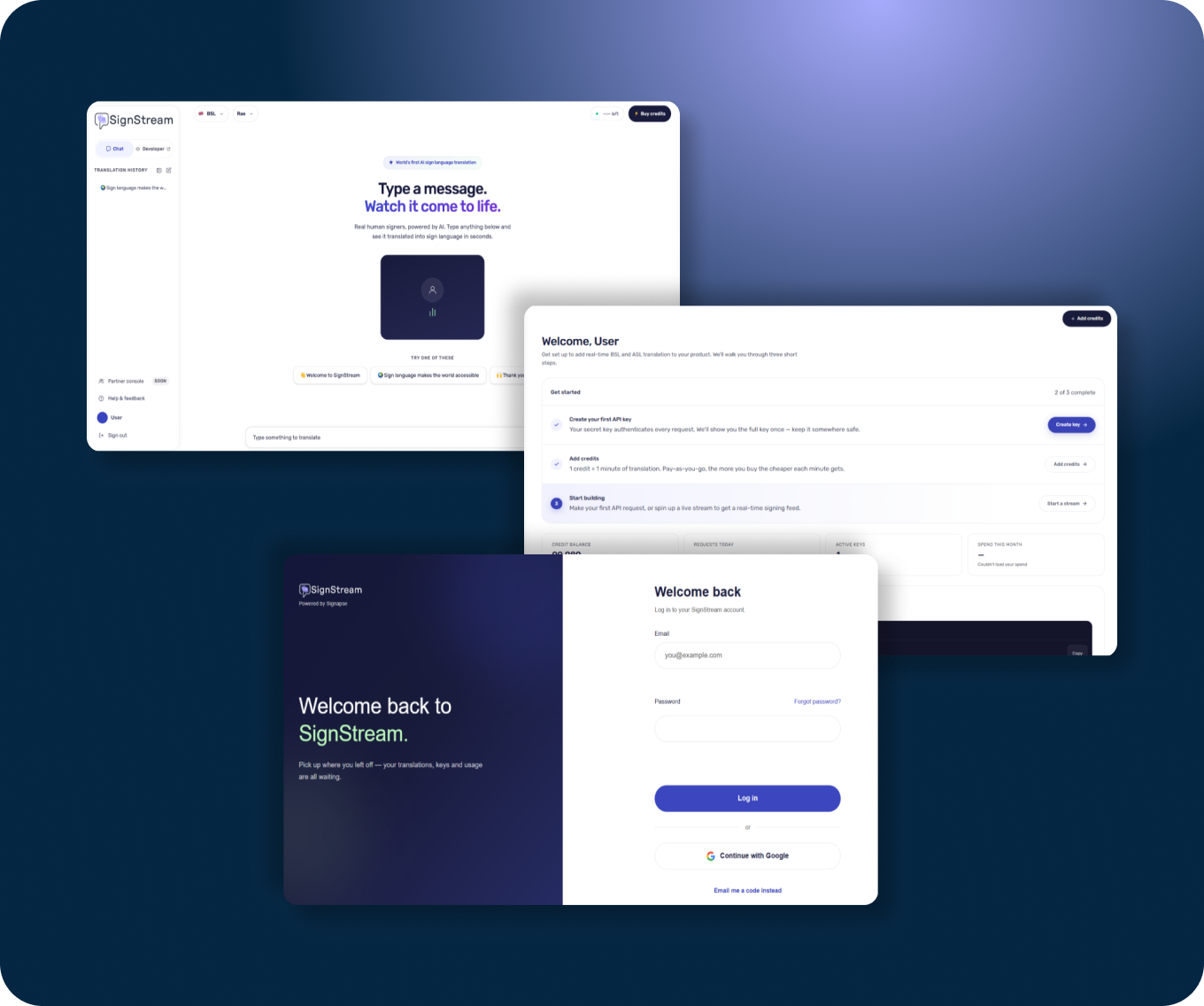
This is where AI-powered sign language can help handle the load. Solutions, such as SignStudio and SignStream, can make video, audio and written content available in sign language at a scale that traditional interpreting alone struggles to match.
For more information on how human interpreters and AI sign language tools can complement each other, read our guide to how organisations can scale their accessibility efforts efficiently.
Where It Matters Most
The EAA covers the places people interact with every day: banking apps and ATMs, train and airline booking sites, ticket machines and check-in kiosks, streaming platforms, online shops, smartphones and emergency services. Each is a point where information either reaches someone or doesn’t.
Sign language translation can help close that gap, from a help video on a bank’s website to travel updates on screens and the latest shows.
How Signapse Can Support EAA Compliance
The EAA is a significant step towards a more accessible Europe, but it is a baseline. For organisations that want to serve Deaf customers properly, sign language is where the baseline ends and real inclusion begins.
At Signapse, we offer AI-powered sign language solutions for live and post-production content to ensure organisations have an accessibility tool that meets their needs. Explore SignStudio and SignStream or book a demo to see how accessibility can be seamlessly built into your workflows.
Don’t wait for regulations to mandate accessibility. Show your whole audience you care with sign language translation today.
Related Articles
The ASL Scalability Problem Enterprise Teams Can’t Ignore
The Media Act 2024: What Broadcasters Need to Know
How Small Businesses Can Incorporate Accessibility Tools With a Tight Budget
FAQs
Is sign language listed as a European Accessibility Act requirement?
No, the EAA does not require sign language for most content. It names sign language interpretation as one of the access services audiovisual providers can offer, and it requires total conversation where video is provided. Sign language translation can still support an organisation’s accessibility approach and go beyond the baseline.
Who has to comply with the EAA?
The Act applies to manufacturers, importers, distributors and service providers placing covered products or services on the EU market, including non-EU companies selling into it. Microenterprises providing services are exempt. Penalties and enforcement differ by country, so you should check the rules where you operate.
What is the difference between the EAA and the AVMS Directive?
The AVMS Directive governs audiovisual media, including whether services become more accessible through subtitles, audio description or sign language. The EAA covers how those access services are delivered, so users can easily find, select and control them. Together they shape accessibility across media and streaming in the EU.